
Latest articles
Standardizing the Tax Non-Collection Procedure for Exported and Imported Goods under Decision No. 1768/QD-BTC

Expanding import-export scale brings about transactions involving returned defective goods, undeliverable international postal parcels, re-exported goods returned to foreign cargo owners, or unpaid tax goods that already meet tax refund conditions. A timely tax non-collection mechanism helps enterprises avoid having to pay money into the state budget first and subsequently go through tax refund application procedures.
The tax non-collection procedure for exported and imported goods (Procedure Code 1.009559) was comprehensively amended and supplemented by the Ministry of Finance on July 2, 2026, under Decision No. 1768/QD-BTC announcing newly issued, amended, and supplemented administrative procedures in the customs sector, replacing the content previously announced in Decision No. 764/QD-BTC dated April 5, 2021. Taking effect from the date of signing, the Decision establishes a flexible processing mechanism for each scenario arising in practice—such as goods eligible for tax refund where tax has not yet been paid, or goods re-imported and re-exported at the same or a different location from where initial customs procedures were conducted.
Urgency and Core Innovations of the Tax Non-Collection Procedure
The urgency of amending and supplementing Administrative Procedure Code 1.009559 stems from the need to definitively resolve practical obstacles involving goods re-imported and re-exported across multiple different border gates, as well as to synchronize workflows on the Customs Electronic Data Processing System in accordance with Law on Tax Administration No. 108/2025/QH15. Under the former regulations announced in Decision No. 764/QD-BTC of 2021, when an enterprise exported goods through one border gate but had to re-import them through another border gate, or had inadvertently paid taxes on a re-import or re-export declaration prior to submitting a tax non-collection dossier, inter-unit confirmation between two customs units often took considerable time exchanging paper documents—causing capital tie-ups and delaying cargo clearance. 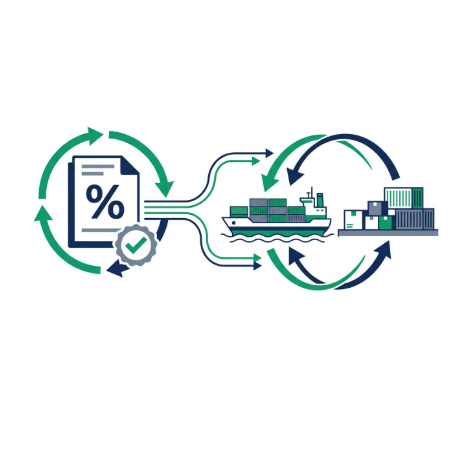
Compared to Decision No. 764/QD-BTC dated April 5, 2021, the tax non-collection procedure under Decision No. 1768/QD-BTC introduces four superior innovations:
- First, it clearly separates two applicable subject groups: goods eligible for tax refund where tax has not yet been paid (Articles 33 through 37 of Decree No. 134/2016/ND-CP) and goods exempt from import and export duties for re-imported and re-exported goods (Articles 33 and 34 of Decree No. 134/2016/ND-CP).
- Second, it standardizes the settlement workflow according to four practical operational scenarios: immediate settlement within the customs procedure time limit under Article 23 of the Law on Customs when the initial declaration incurs no refundable tax; inter-unit coordination on the electronic system when re-importation or re-exportation occurs at a location different from the initial one; processing after completing the initial tax refund if re-importation or re-exportation takes place at the same location; and issuing a tax non-collection decision within 05 working days if the enterprise submits the dossier after the re-imported or re-exported goods have already been cleared.
- Third, it clearly stipulates that where an enterprise has already paid taxes on a re-import or re-export declaration and is subsequently issued a tax non-collection decision, the paid tax amount is immediately handled under the overpaid tax procedure pursuant to Article 7 of Circular No. 86/2026/TT-BTC.
- Fourth, it applies a mechanism exempting physical inspection of goods for authorized economic operators (priority enterprises) when settling tax non-collection right at the time of carrying out customs procedures.
Detailed Regulations on Applicable Subjects, Dossier Components, and Implementation Sequences
Regarding applicable subjects and conditions, Administrative Procedure Code 1.009559 applies to organizations and individuals whose exported or imported goods qualify for tax refund where tax has not yet been paid, or whose exported goods must be re-imported or imported goods must be re-exported and qualify for tax non-collection pursuant to the Law on Export and Import Duties and Decree No. 134/2016/ND-CP. The procedure collects no fees or charges, and the dossier quantity is 01 set. Electronic dossier components comprise the information fields of the written request for tax non-collection prepared in accordance with Appendix II of Circular No. 86/2026/TT-BTC (Form No. 15a for exported goods required to be re-imported, Form No. 14 for imported goods required to be re-exported, or paper Form No. 38, Appendix I when the system encounters an incident). Accompanying documents include payment vouchers (if payment has been made), import-export contracts, entrustment contracts, commercial invoices or export invoices, written return notices from foreign customers, written confirmations from international postal or express delivery enterprises regarding undeliverable goods, or written confirmations from ship-chandling enterprises accompanied by payment statements. In cases of force majeure or where the taxpayer self-detects errors requiring re-importation, a written notice from the foreign customer is not required, provided the reason is clearly stated in the written request.
Regarding implementation methods and sequences, enterprises submit electronic dossiers via the Customs Electronic Data Processing System or submit digitally signed scanned copies for documents without electronic data fields (submitting paper copies in person or via postal services only when the system encounters an incident or when original copies are mandatory under regulations). The workflow consists of three steps:
- Step 1: The taxpayer submits the tax non-collection request dossier to the customs authority.
- Step 2: Within 03 working days from the date of receipt, the customs authority responds with dossier acceptance using Form No. 3, Appendix II or requests explanation or supplementation using Form No. 7, Appendix II; the taxpayer has 05 working days to provide supplementation or explanation (this period is excluded from the processing timeline).
- Step 3: The customs authority settles the dossier according to each case: if the goods qualify for tax refund where tax has not yet been paid, it processes the case under the tax refund workflow in Article 11 of Circular No. 86/2026/TT-BTC (06 working days for refund-first cases or 10 working days following inspection conclusions); if the dossier for re-imported or re-exported goods is submitted right during customs procedures and the initial declaration incurs no refundable tax, it settles the case immediately within the customs clearance time limit under Article 23 of the Law on Customs; if the dossier is submitted after the re-imported or re-exported goods have been cleared, it issues a tax non-collection decision within 05 working days from the date of the dossier receipt notice.
Regarding settlement authority, the Head of the customs authority where the tax non-collection request dossier for re-imported or re-exported goods is received, or where the declaration giving rise to the tax obligation is managed, holds the authority to examine the dossier, cross-check system data, and issue the Tax Non-Collection Decision on the Customs Electronic Data Processing System (or using Form No. 16, Appendix I if processed on paper), or issue a notice of ineligibility using Form No. 02, Appendix I.
Policy Impact Assessment, Estimated Benchmarks, and Implementation Orientation
The tax non-collection procedure under Decision No. 1768/QD-BTC delivers practical effectiveness in preserving cash flow and lowering financial costs for import-export enterprises. Instead of tying up capital to pay taxes on shipments eligible for refund or goods forced to turn back for re-importation or re-exportation due to commercial incidents, enterprises are considered for tax non-collection by the customs authority right within the clearance time limit or within 05 to 06 working days. The data interoperability mechanism between the initial import-export border gate and the re-import/re-export border gate on the electronic system significantly shortens waiting times for inter-unit confirmation, reduces warehousing and container demurrage costs at ports, and minimizes supply chain disruptions.
For the state management work of the Customs sector, clearly categorizing each re-import and re-export scenario and tightly linking tax non-collection decisions with the overpaid tax handling workflow helps prevent the risk of abusing returned-goods policies for origin fraud, import duty evasion, or duplicate tax refunds. Applying selective physical inspection of goods and exempting physical inspection for priority enterprises also clearly demonstrates a modern risk management orientation, focusing supervisory resources on high-risk shipments.
Based on the digitalized workflow, immediate settlement within the customs procedure time limit for dossiers submitted at clearance, 05 working days for post-clearance submissions, 06 working days for unpaid refund-first cases, and the 2025–2026 administrative reform mandate to cut at least 30% of compliance time and costs:
- Electronic submission rate: The rate of tax non-collection request dossiers submitted via the Customs Electronic Data Processing System is estimated to reach approximately 88% to 96%.
- On-time settlement rate: The rate of valid dossiers settled within prescribed timelines is estimated to reach approximately 97% to 100%.
- Time savings: Dossier preparation and inter-border-gate reconciliation waiting times for enterprises are estimated to decrease by approximately 35% to 50%.
- Cost reduction and nationwide rollout: Administrative compliance costs for printing, travel, and storage are estimated to drop by approximately 30% to 45%, ensuring 100% uniform implementation across customs units nationwide.
Implementation Roadmap and Next Steps
To ensure the policy operates smoothly, customs units need to step up outreach so enterprises proactively submit tax non-collection request dossiers right at the time of registering re-import or re-export declarations in order to take advantage of immediate settlement within the clearance time limit. Concurrently, units must enhance the effectiveness of looking up and cross-checking original declaration data on the Customs Electronic Data Processing System between border-gate and non-border-gate units to ensure accuracy and timeliness.
Most Recent Bài viết
| Title | Category | Created On |
|---|---|---|
| Enhancing Transparency and Shortening the Processing Workflow for Overpaid Taxes, Other Revenues, Late Payment Interest, and Fines under Decision No. 1768/QD-BTC | General | 2026-11-27 10:45:48 |
| Standardizing the Tax Exemption Procedure for Exported and Imported Goods under Decision No. 1768/QD-BTC | General | 2026-11-27 10:40:23 |
| Standardizing the Tax Non-Collection Procedure for Exported and Imported Goods under Decision No. 1768/QD-BTC | General | 2026-11-27 08:59:04 |
| Standardizing the Notification Procedure for Lists of Duty-Free Goods Expected to Be Imported under Decision No. 1768/QD-BTC | General | 2026-11-27 08:43:31 |
| Late Payment Interest Exemption under Decision No. 1768/QD-BTC | General | 2026-11-26 16:01:17 |
Bài viết

|
A Quick Intro |
Search Trade Information
|
|
|
|
|
|
|
|
|
|
|
|
|
|


Feature Information
|
|
|
|
|
|
|
|
|
|
|


Information & Articles
|
|
|
|
|
|
|
|
|
|
|


