
Latest articles
Enhancing Transparency and Shortening the Processing Workflow for Overpaid Taxes, Other Revenues, Late Payment Interest, and Fines under Decision No. 1768/QD-BTC

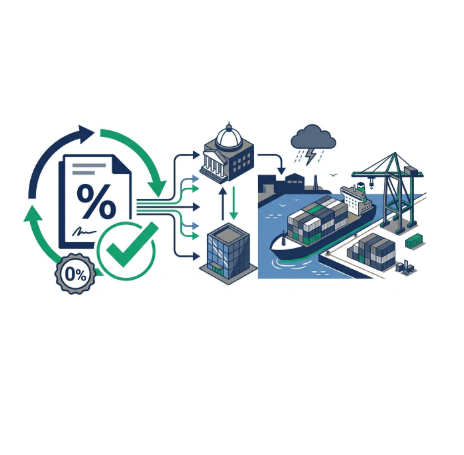
The rapid growth in the volume of customs declarations and tax payment transactions via commercial banks and the State Treasury entails an urgent need to promptly handle overpaid or erroneously paid taxes, deposits, late payment interest, and fines in order to free up capital for enterprises. A fast and accurate refund process for overpaid amounts is a key factor in unlocking tied-up working capital for the business community. On July 2, 2026, the Ministry of Finance promulgated Decision No. 1768/QD-BTC announcing newly issued, amended, and supplemented administrative procedures in the customs sector. Specifically, the Procedure for Handling Overpaid Taxes, Other Revenues, Late Payment Interest, and Fines (Procedure Code 1.012843) has been comprehensively amended and supplemented pursuant to Article 7 of Circular No. 86/2026/TT-BTC and Article 15 of Law on Tax Administration No. 108/2025/QH15, replacing the content previously announced at Ordinal Number 4, Point A, Section 2, Part I of Decision No. 2065/QD-BTC dated October 6, 2022.
Urgency and Superior Innovations of the Overpaid Tax Handling Procedure
The urgency of amending and supplementing Administrative Procedure Code 1.012843 stems from the requirement to ensure consistency between Law on Tax Administration No. 108/2025/QH15 and the centralized accounting and import-export tax administration workflows under Circular No. 86/2026/TT-BTC. In import-export operations, overpayments frequently arise due to various objective causes—such as enterprises erroneously paying the wrong amount or tax category code, re-exporting goods under temporary import for re-export business regimes for which a deposit equivalent to import duty was paid, or having paid an amount higher than the liability redetermined under complaint settlement decisions, Court judgments, tax assessment decisions, or administrative penalty decisions of the customs authority. If the refund workflow lacks electronic interoperability with the State Treasury and domestic tax authorities, enterprises risk prolonged capital lock-up or duplicate deductions in value-added tax (VAT).
Compared to the former provisions in Decision No. 2065/QD-BTC dated October 6, 2022, the procedure for handling overpaid taxes, other revenues, late payment interest, and fines under Decision No. 1768/QD-BTC delivers four major reforms:
- First, the scope of tax categories and overpaid amounts is transparently enumerated, encompassing all export duties, import duties, safeguard duties, anti-dumping duties, countervailing duties, excise taxes, environmental protection taxes, VAT, other revenues, erroneously paid or overpaid late payment interest and fines, as well as deposits for goods under temporary import for re-export business regimes following re-exportation.
- Second, the workflow for dossier reception, classification, and refund decision issuance is fully digitalized on the Customs Electronic Data Processing System, enabling taxpayers to declare data fields using Form No. 2, Appendix II and receive digitally signed electronic tax refund decisions directly on the system.
- Third, settlement timelines are strictly defined: the customs authority responds regarding non-acceptance or requests dossier supplementation within 03 working days and issues the refund decision within 05 working days from the date of receiving a complete and valid dossier, with a zero-dong fee.
- Fourth, the inter-agency coordination mechanism with domestic tax authorities is clearly standardized for cases involving refunds of overpaid import VAT that enterprises have already declared for deduction, ensuring accurate recovery of deducted tax amounts and preventing state budget revenue losses.
Detailed Regulations on Applicable Subjects, Dossier Components, and Implementation Sequences
Regarding applicable subjects and conditions, Administrative Procedure Code 1.012843 applies to taxpayers incurring overpaid taxes, other revenues, late payment interest, and fines within the regulatory scope of Article 15 of Law on Tax Administration No. 108/2025/QH15 and Article 7 of Circular No. 86/2026/TT-BTC. The procedure is carried out completely free of fees and charges, with a dossier quantity of 01 set. Dossier components comprise a Written Request for Refund of Overpaid Taxes, Other Revenues, Late Payment Interest, and Fines prepared according to Form No. 2, Appendix II of Circular No. 86/2026/TT-BTC submitted via the electronic system (or Form No. 04, Appendix I where the system encounters an incident), accompanied by relevant vouchers and documents proving the overpayment.
Regarding implementation methods and sequences, taxpayers declare information fields on the Customs Electronic Data Processing System or submit digitally signed scanned copies for documents that cannot yet be declared via electronic data fields; paper dossiers submitted in person or via postal services are used only when the system encounters an incident. The processing workflow consists of two clear steps:
- Step 1: The taxpayer submits the overpayment handling request dossier to the customs authority where the overpaid amount arose.
- Step 2: Within 03 working days from the date of receiving the dossier, the customs authority examines it and responds regarding non-acceptance if the applicant is ineligible (Form No. 3, Appendix II) or issues a notice requesting dossier supplementation (Form No. 7, Appendix II). The taxpayer has 05 working days to provide explanation or supplementation; if the taxpayer fails to supplement within this deadline, the customs authority issues a notice stating there are insufficient grounds for review and settlement. Within 05 working days from the date of receiving a complete and valid dossier (excluding supplementation time), the Head of the customs authority where the overpaid amount arose issues a Decision on Refund of Overpaid Taxes, Other Revenues, Late Payment Interest, and Fines on the electronic system (or using Form No. 07, Appendix I if processed on paper) or issues a notice that the dossier does not meet refund conditions.
Regarding the assignment of authority and inter-agency coordination, the Head of the customs authority where the overpaid amount arose holds direct authority to examine and reconcile tax accounting figures and issue the refund decision, coordinating closely with the State Treasury to execute the state budget refund order. Specifically for overpaid VAT at the import stage that the enterprise has already declared for deduction with the domestic tax authority, the taxpayer is responsible for declaring a downward adjustment for the VAT amount refunded by customs with its directly managing tax authority; concurrently, the customs authority sends the tax refund decision to the tax authority managing the taxpayer as a basis for cross-checking, supervision, and recovery of any duplicatively deducted or refunded VAT.
Policy Impact Assessment, Estimated Benchmarks, and Implementation Orientation
The procedure for handling overpaid taxes, other revenues, late payment interest, and fines under Decision No. 1768/QD-BTC generates a direct positive impact on the financial liquidity and cash flow management efficiency of import-export enterprises. In international trade practice, recalculating customs values, applying revised anti-dumping or countervailing duty rates following reviews, altering goods classification results, or completing the re-exportation of temporarily imported goods frequently creates high-value deposits and overpaid taxes. With a 05-working-day settlement timeline via electronic methods and digital signatures, enterprises can swiftly recover tied-up capital for reinvestment into production and business operations without incurring travel expenses or administrative fees.
On the state management side, the electronic processing mechanism and provisions on exchanging VAT refund decision information between the Customs authority and the Tax authority help establish a closed-loop management cycle for state budget obligations. Because data is centrally reconciled on the Tax Accounting System and interoperable with the State Treasury, risks of errors in refund accounting or double-dipping tax refund fraud are tightly controlled—ensuring transparent public financial discipline and fairness between taxpayers and the state budget.
Based on the electronic transaction workflow, the 03-working-day response timeline, the 05-working-day settlement timeline, and the 2025–2026 administrative reform target of cutting at least 30% of compliance time and costs:
- Electronic submission rate: The rate of dossiers requesting the handling of overpaid taxes, late payment interest, and fines submitted via the Customs Electronic Data Processing System is estimated to reach approximately 90% to 98%.
- On-time settlement rate: The rate of valid dossiers issued a refund decision within the 05-working-day deadline is estimated to reach approximately 98% to 100%.
- Time savings: Procedural settlement and voucher reconciliation times for enterprises are estimated to decrease by approximately 35% to 50%.
- Cost reduction and nationwide rollout: Administrative compliance costs are estimated to drop by approximately 30% to 45%, while uniform implementation across border-gate and non-border-gate customs units nationwide is estimated to reach 100%.
Implementation Roadmap and Next Steps
To maximize the effectiveness of the procedure, Regional Customs Sub-departments and Border-Gate/Non-Border-Gate Customs units need to strengthen guidance for enterprises on periodically reviewing overpaid balances on the tax accounting system, accurately declaring information fields according to Form No. 2, Appendix II, and strictly fulfilling their obligation to declare VAT adjustments with domestic tax authorities when refunds arise. Concurrently, units must maintain seamless data connectivity among the Customs authority, the State Treasury, and the Tax authority to minimize the time it takes for refunded funds to actually reach taxpayers' bank accounts.
Most Recent Bài viết
Bài viết

|
A Quick Intro |
Search Trade Information
|
|
|
|
|
|
|
|
|
|
|
|
|
|


Feature Information
|
|
|
|
|
|
|
|
|
|
|


Information & Articles
|
|
|
|
|
|
|
|
|
|
|


