
Latest articles
WCO’s Operation DEMETER XII: Waste Trafficking is Growing, but so is the Customs Crackdown

- Global illicit trade in waste continues to surge, with plastics and e-waste interceptions rising on the back of strengthened global regulations.
- Operation DEMETER XII generated new intelligence on illicit waste trafficking, controlled substances under the Montreal Protocol and the routes connecting them.
- Enhanced training among the 114 participating Customs administrations strengthened institutional capacity and officers’ practical skills to combat environmental crime.
The World Customs Organization (WCO) has concluded Operation DEMETER XII, its flagship global enforcement operation targeting the illicit trade in waste and substances controlled under the Montreal Protocol on Substances that Deplete the Ozone Layer. Sponsored by the Customs Cooperation Fund - China (CCF-China), the operation brought together 114 WCO Member Customs administrations, alongside the WCO’s global Regional Intelligence Liaison Office (RILO) network and eight international partner organizations. In addition to a six-week operational phase, DEMETER XII included capacity-building activities and practical cooperation designed to strengthen enforcement capabilities on the ground.
Trafficking in illicit waste on the rise
The operation recorded 575 seizures, an increase of 40.6% compared with DEMETER XI in 2025. E-waste was the most frequently detected waste category, accounting for 20.3% of reported seizures. Together, e-waste, plastics, end-of-life vehicles and machinery, metals, and textiles accounted for 73.3% of reported waste seizures. Reported seizures covered a range of waste streams and controlled substances:
- 14,271 tonnes of waste, together with 140,661 pieces of waste for which weight was not recorded.
- 102 tonnes of ozone-depleting substances (ODS) and hydrofluorocarbons (HFCs) controlled under the Montreal Protocol.
- 51.4 tonnes and 266 pieces of equipment containing or relying on substances controlled under the Montreal Protocol, excluding unsorted equipment classified as mixed waste.
- 18.6 tonnes and 23 million pieces of other commodities, including pesticides, mercury and mercury compounds, drugs, and other items.
- 88% increase in seizures of textile waste compared to 2025 with 47 seizures recorded.
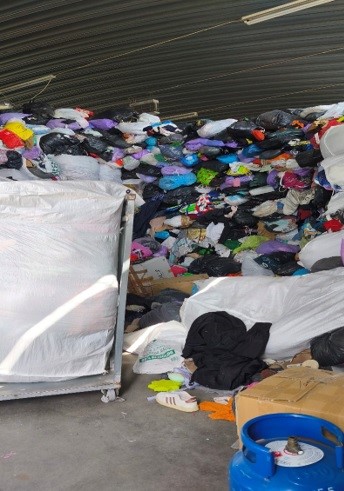
(Portugal Customs stopped the export of 65,870 kg of textile waste destined for Dubai, United Arab Emirates, following confirmation from the environmental agency)
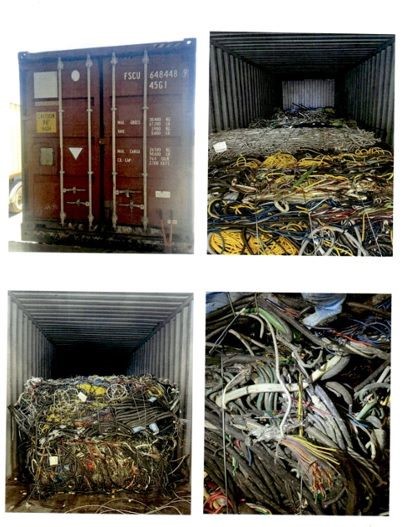
(Thai Customs seized 40,324 kg of contaminated cables and metal scrap imported from Malaysia)
WCO Secretary General Ian Saunders said, “Environmental crime is evolving rapidly, with the illicit trafficking and disposal of waste posing significant risks to our environment, public health and legitimate trade. Customs plays a critical role in protecting society against these threats. Operation DEMETER XII demonstrates the power of combining Customs expertise, environmental knowledge and coordinated action with other law enforcement agencies. By strengthening cooperation, sharing intelligence and pooling our resources, we can close enforcement gaps, hold criminals accountable and ensure illicit waste trafficking has no place in legitimate global supply chains.”
Strengthening international controls
The Basel Convention’s E-waste Amendments came into force on 1 January 2025, which strengthened international controls on transboundary movements of e-waste. This change resulted in more verifications of shipments and increased seizures as Customs looked to close enforcement gaps working together with environmental authorities.
The findings of Operation DEMETER XII also highlighted the evolving plastic waste trafficking patterns brought by recent changes to the European Union (EU) Waste Shipment Regulation, particularly the introduction of the prior notification and consent requirement for plastic waste exports on 21 May 2026. European countries reported half of all plastic waste seizures, and, notably, half of the total seized shipments departing from Europe. These findings underlined the importance of continued Customs vigilance in monitoring potential shifts in trafficking routes and the possible diversion of illicit shipments towards alternative destinations, particularly as the EU's prohibition on plastic waste exports to non-OECD countries took effect on 21 November 2026. Common violations included failure to comply with the prior informed consent procedure and the misdeclaration of waste as raw materials or other legitimate goods.
Europe to Africa – mapping trafficking corridors
Across reported waste shipments among participating Members, Europe accounted for 59.8% of recorded departure points, while Africa and Asia together accounted for 77.4% of recorded destinations. The Europe-to-Africa corridor was the largest identified intercontinental trafficking route, accounting for 117 seizures (27.5%). The data also pointed to South–South movements within Africa, raising questions about the potential role of regional repackaging and onward transport in complex waste trafficking chains.
The Europe-Africa trafficking corridor also saw 40% of the seizures in textile waste. Seizures varied in size and transportation method – with some being carried in personal luggage and others included in large commercial shipments. While there is a large international second-hand market for clothing, the same supply chains can be exploited to export damaged, unsorted or non-reusable textiles that are unsuitable for resale or environmentally sound management.
In addition to inter-continental trafficking routes, there were 75 seizures involving intra-European shipments. These present enforcement challenges, particularly where operators exploit differences in regulatory requirements, documentation procedures and national control practices, especially between EU and non-EU countries.
Environmental crime does not operate in isolation
DEMETER XII produced valuable seizures indicating potential links between environmental offences and other forms of illicit activity. These seizures demonstrated the important role Customs plays in identifying indicators of wider criminal activity beyond the declared nature of environmental goods. Examples included:
- Brazil: A seizure involving 550 kg of cannabis concealed in a truck transporting plastic waste, illustrating how waste movements can intersect with drug trafficking.
- Indonesia: A seizure of 3,443 kg of mercury destined for Burkina Faso via Togo, raising concerns about a possible connection with illegal mining activities.
- Senegal: Two seizures involving 1,400 kg and 6,960 kg of explosive precursors, identified through intelligence-led enforcement.
Cooperation strengthens enforcement on the ground
DEMETER XII highlighted the importance of practical cooperation and capacity building in strengthening operational enforcement. The WCO enhanced engagement with environmental specialists, including experts from the European Union Network for the Implementation and Enforcement of Environmental Law (IMPEL) and National Ozone Units, while participating administrations reported joint training, inspections and follow-up investigations involving Customs and other competent authorities. These efforts strengthened officers’ practical skills and institutional capacity to combat environmental crime.
DEMETER XII illustrates how coordinated international action can act as a force multiplier: connecting national enforcement efforts, specialist expertise and operational intelligence to help Customs administrations identify emerging trafficking patterns, cross-border supply chain risks and respond more effectively.
About Operation DEMETER XII
Operation DEMETER XII is a flagship operation for the WCO in its 12th year. Funded by the Customs Cooperation Fund - China (CCF-China), the operation brings together WCO Member Customs administrations, alongside the WCO’s global Regional Intelligence Liaison Office (RILO) network and eight international partner organizations to combat environmental crime. The WCO partners with:
- European Anti-Fraud Office (OLAF)
- European Union Agency for Law Enforcement Cooperation (Europol)
- European Union Network for the Implementation and Enforcement of Environmental Law (IMPEL)
- Secretariat of the Basel, Rotterdam and Stockholm Conventions (BRS Secretariat)
- United Nations Environment Programme Green Customs Initiative (GCI)
- United Nations Environment Programme (UNEP) OzonAction
- United Nations Office on Drugs and Crime (UNODC) Passenger and Cargo Control Programme (PCCP)
- United Nations Office on Drugs and Crime (UNODC) WasteNet Project
Most Recent Bài viết
| Title | Category | Created On |
|---|---|---|
| WCO’s Operation DEMETER XII: Waste Trafficking is Growing, but so is the Customs Crackdown | General | 2026-11-27 16:46:33 |
| WCO supports countries of the EAC in revising rules of origin and developing autonomous training capacities | General | 2026-11-27 16:43:18 |
| Standardizing the Import and Export Duty Reduction Procedure and Abolishing Obsolete Receipt Regulations under Decision No. 151/QD-BTC | General | 2026-11-27 11:13:00 |
| Restructuring and Digitalizing the Export and Import Duty Refund Procedure under Decision No. 1768/QD-BTC | General | 2026-11-27 11:06:08 |
| Standardizing and Digitalizing the Extension Procedure for Payment of Taxes, Other Revenues, Late Payment Interest, and Fines in the Customs Sector under Decision No. 1768/QD-BTC | General | 2026-11-27 11:00:34 |
Bài viết

|
A Quick Intro |
Search Trade Information
|
|
|
|
|
|
|
|
|
|
|
|
|
|


Feature Information
|
|
|
|
|
|
|
|
|
|
|


Information & Articles
|
|
|
|
|
|
|
|
|
|
|


